
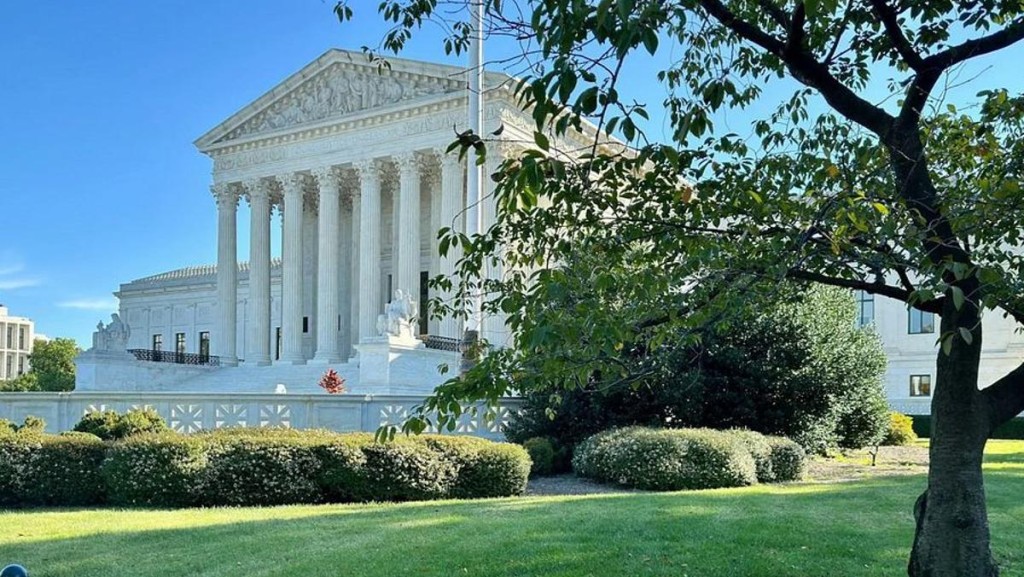
The U.S. Supreme Court has made it easier for immigration officials to challenge the reentry of lawful permanent residents, ruling that border agents do not need "clear and convincing evidence" that a green card holder committed a disqualifying offense before treating that person as an applicant for admission.
The 6-3 decision stems from the case of Muk Choi Lau, a Chinese citizen and U.S. green card holder who was stopped at John F. Kennedy International Airport in 2012 after authorities linked him to a New Jersey counterfeiting investigation. Rather than being automatically readmitted as a returning resident, Lau was placed into immigration parole status.
Writing for the majority, Justice Clarence Thomas said the Immigration and Nationality Act requires only a "reason to believe" a qualifying offense occurred when immigration officers make admission decisions at ports of entry.
The ruling does not end Lau's case. The Second Circuit previously vacated his removal order, and the Supreme Court has now remanded the matter for further proceedings on whether his conviction qualifies as a crime involving moral turpitude (CIMT), a category of offenses that can trigger immigration consequences.
Immigration attorneys told Newsweek the decision could expose some green card holders to greater scrutiny when returning from international travel, while supporters argue it restores the border authority Congress intended immigration officers to exercise.
The ruling aligns with the Trump administration's broader emphasis on border enforcement and could make it easier for authorities to initiate removal proceedings against some returning permanent residents at airports and other ports of entry.
Although the legal grounds for deportation remain unchanged, the decision lowers the threshold officers must satisfy before treating a green card holder as someone seeking admission to the country rather than automatically readmitting them as a returning resident.
The Ruling Explained
At the center of the dispute is not simply what evidence border agents need, but who bears the burden of proof once a case enters the immigration system.
Several lower courts had concluded that immigration officers needed "clear and convincing evidence" before denying automatic reentry to a lawful permanent resident and classifying that individual as an applicant for admission. The Supreme Court rejected that interpretation, holding that a "reason to believe" standard applies instead.
The distinction carries significant procedural consequences.
When a green card holder is admitted as a returning resident, the government generally bears the burden of proving deportability if it later seeks removal. But when officials classify a returning resident as an applicant for admission and place that person into parole status, the legal posture changes.
In many cases, the individual must affirmatively demonstrate admissibility and eligibility to retain lawful permanent resident status. Immigration lawyers note that federal authorities may also confiscate the person's physical green card while proceedings remain pending.
Critics argue the lower threshold makes it easier to move permanent residents into a legal framework where they must defend their right to remain in the United States before underlying criminal allegations have been fully resolved.
Supporters respond that border officers must be able to make practical decisions without conducting full evidentiary hearings at airports and border crossings, and that immigration judges ultimately retain authority to review removal cases.
What Is a 'Crime Involving Moral Turpitude’?
A crime involving moral turpitude, or CIMT, is an immigration-law term generally applied to conduct involving fraud, dishonesty, theft, forgery, perjury, or certain violent offenses. Because Congress never provided a comprehensive statutory definition, courts determine whether particular crimes qualify on a case-by-case basis.
A CIMT finding can affect admissibility, trigger removal proceedings, and limit eligibility for immigration benefits.
What This Means for Green Cardholders
The ruling does not mean lawful permanent residents automatically lose their green card status. However, immigration attorneys say it could significantly increase scrutiny for some travelers returning to the United States.
Green cardholders with pending criminal charges, prior arrests or convictions, allegations involving fraud, theft, drugs, crimes involving moral turpitude, previous immigration violations, or lengthy absences abroad may now face greater risks when reentering the country.
Under the Supreme Court's interpretation, immigration officers may have broader authority to delay admission, place travelers into parole status, initiate removal proceedings, or detain individuals while their cases are reviewed.
Dobrina M. Ustun, an immigration attorney, told Newsweek the ruling raises concerns beyond procedure because green card holders may now face "serious immigration consequences before their criminal case is even resolved," something she said is difficult to reconcile with the presumption of innocence.
Ustun advised lawful permanent residents with pending charges or prior convictions to expect increased scrutiny when returning to the United States and to consult an immigration attorney before traveling internationally. She added that even older or relatively minor offenses can create immigration complications and urged green card holders to seek legal advice before accepting plea agreements.
Pace University law professor Bennett Gershman described the ruling as "a huge enlargement of the border authorities' ability to stop lawful immigrants from coming into the country."
He said the decision grants officials "huge power to stop them, to question them, to detain them," warning that border officers now possess extremely broad discretion when evaluating returning permanent residents.
Gershman added that lawful permanent residents traveling abroad "really have to be wary now of what their rights are," because they may face heightened questioning, detention, or removal proceedings upon return.
Immigration attorneys Roxanne H. Levine and Edwin M. Hernández García of Tarter Krinsky & Drogin similarly warned in a June 2 client alert that "even minor criminal charges could trigger a border agent to determine that a returning permanent resident might be admitted to the United States in parole status," potentially exposing that individual to detention and removal proceedings.
Supporters Say Decision Restores Congress' Intended Border Authority
The Department of Justice argued throughout the case that lower courts improperly imposed an evidentiary requirement that Congress never included in federal immigration law.
Government lawyers maintained that border inspections are intended to function as rapid screening procedures rather than minitrials. Requiring immigration officers to possess "clear and convincing evidence" before classifying a returning resident as an applicant for admission, they argued, would make it more difficult for officials to act when travelers appear linked to potentially disqualifying criminal conduct.
The Supreme Court majority largely embraced that reasoning. Justice Clarence Thomas wrote that the Immigration and Nationality Act requires only a "reason to believe" a qualifying offense occurred, not courtroom-level proof at the border.
Conservative immigration advocates also welcomed the ruling.
Analysts associated with The Heritage Foundation have long argued that lawful permanent residence is a conditional immigration status rather than an unconditional right of entry. Under that view, border officials should retain broad authority to scrutinize returning residents who may have committed deportable offenses.
Likewise, policy experts affiliated with Advancing American Freedom and other conservative legal groups have argued that Congress intentionally granted immigration officers substantial discretion at ports of entry and that courts should not impose procedural requirements beyond those found in statute.
Supporters stress that the ruling does not create new grounds for deportation. A green card holder must still ultimately be found removable under existing immigration law. In their view, the decision simply clarifies what level of evidence border officers need before initiating that process.
What To Know About Airport Travel
The case highlights the immigration risks that can arise when green card holders travel abroad while facing criminal allegations or carrying prior convictions.
Under federal law, lawful permanent residents are generally entitled to return from brief trips overseas. However, important exceptions exist for individuals who may have committed crimes involving moral turpitude or other disqualifying offenses.
The Supreme Court's decision confirms that immigration officers may consider pending charges—not just convictions—when deciding whether a returning resident should be admitted as a lawful permanent resident or treated as an applicant for admission.
That distinction can have major consequences because it affects who bears the burden of proof in later proceedings.
At airports, seaports, and land crossings, officers from U.S. Customs and Border Protection determine whether returning green card holders are admitted as residents or diverted into a more intensive inspection process that can lead to detention or removal proceedings.
Recent cases illustrate how older criminal histories can become relevant during border inspections. In one widely discussed case, Curtis J. Wright, a Canadian-born green card holder who had lived in the United States since childhood, was detained after officers reviewed a decades-old misdemeanor conviction during secondary screening at George Bush Intercontinental Airport.
'Massive Blank Check' Warning
In a dissent joined by Justices Sonia Sotomayor and Elena Kagan, Ketanji Brown Jackson warned that the ruling could dramatically expand federal authority over lawful permanent residents.
"I worry that the Court has now handed the Government a massive blank check," Jackson wrote.
She argued that immigration officials may now be able to classify green card holders as applicants for admission based on allegations and only later seek to justify that decision if a conviction is eventually obtained.
According to Jackson, that sequence risks undermining statutory protections designed to ensure that lawful permanent residents are not stripped of their presumptive right to reenter the country unless specific legal conditions are satisfied.
The case now returns to the Second Circuit, which must still decide a question the Supreme Court did not resolve: whether Lau's underlying conviction qualifies as a crime involving moral turpitude.
That determination will help decide whether he can ultimately remain in the United States, even as the Supreme Court's ruling reshapes the legal framework governing how returning green card holders are treated at the border.
Contact Newsweek editors on this story: Matt Cannon and James Debens.