
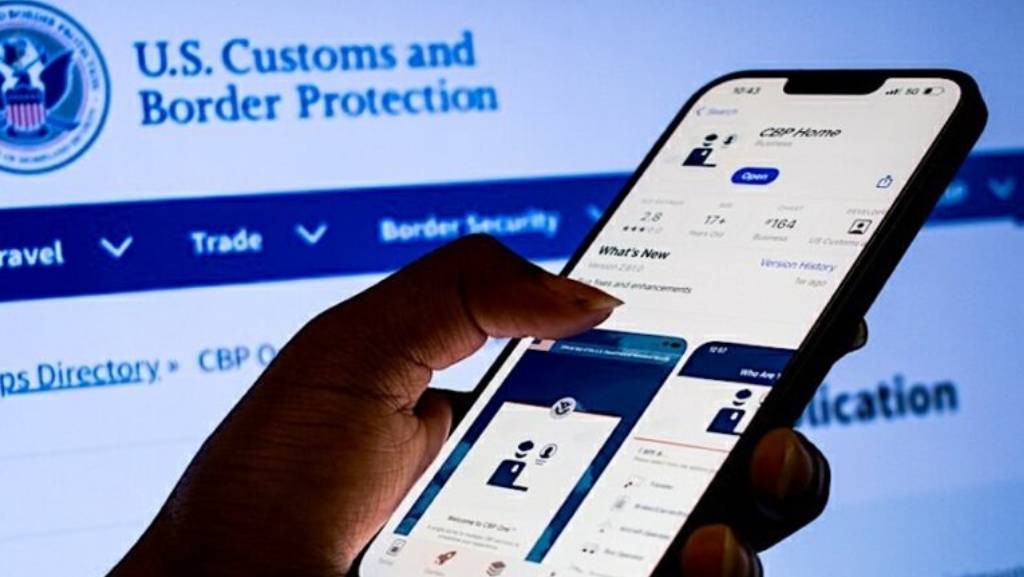
Some people can use a U.S. government phone app called "CBP Home" to leave the United States. The government calls this "self-deportation."
The information below is for asylum seekers who are not detained by ICE and have already decided that they want to leave the United States. People in ICE detention may be offered a process called “ incentivized voluntary departure. ” It is similar to CBP Home, but does not involve an app.
Only people with no criminal history can use CBP Home. If you have ever been arrested or accused of a crime, using CBP Home could put you at risk of detention. You may also want to be more cautious about using CBP Home if you have not already shared your information with the U.S. government, for example because you do not have a pending immigration case.
You can also leave the United States without using CBP Home. CBP Home will not help you to return to the United States in the future.
Possible benefits of using CBP Home:
-
If you are eligible, the government may pay for a one-way plane ticket to your country of citizenship, or for some people, to another country that gives you permission to travel there.
-
You may receive a $2,600 payment from the U.S. government after you have left and your departure is confirmed through the app. The government calls this an “exit bonus” or “stipend”. But there are also reports of people who use CBP Home to leave, then never receive any payment.
-
Registering your intention to depart using CBP Home may help protect against being arrested and detained while waiting to leave the United States. The U.S. government has detained some people even while they are boarding planes to depart the United States, and has stopped and inspected other immigrants leaving the U.S. at land borders.
-
You may receive help getting travel documents if you do not have a valid passport. But there are some reports of people who request this assistance and do not receive it.
Possible risks of using CBP Home:
-
According to the U.S. government, only people with no criminal history can use CBP Home. If you have any criminal history, using CBP Home could lead to arrest and detention. If you have doubts about anything related to possible criminal history, you may want to talk to a lawyer before downloading CBP Home.
-
The CBP Home application asks you to share a lot of personal information with the U.S. government, including your name, date of birth, photo and potentially your fingerprints. For some people, the U.S. government already has this information. If you have not already shared your information with the U.S. government, for example because you do not have a pending immigration case, you may want to be more cautious before deciding to use CBP Home.
-
If you are trying to go to a country that is not your country of citizenship, that may be more difficult using CBP Home. In the app, if you indicate that you have a valid passport, the app will only allow you to choose that country as your destination. If you do not have a valid passport, you should be able to select a different country, but we do not know if the U.S. government will respect the request to go to a different country.
-
Using CBP Home will not make it easier to re-enter the U.S. legally in the future. Asylum seekers who want to leave the U.S. but avoid a deportation order can consider steps to close their case even if they use CBP Home.
-
If you are currently applying for asylum, and you leave the U.S. using CBP Home, you lose any chance to win your asylum case in the U.S.
-
If you do not have a passport, there have been reports that you may not be able to get help to obtain a travel document by using CBP Home.
-
Some people who have used CBP Home to depart the United States have never received the $2,600 promised by the U.S. government. It may be especially difficult to receive the money if you do not have a passport.
How to use CBP Home:
-
Important: be sure that you want to use CBP Home to leave the U.S. before you download the app and start to use it. Read the rest of this list before making a decision. The app will give a lot of personal information to the U.S. government. If you are still deciding whether to leave the U.S., or if you have ever been accused of criminal activity, you may want to talk to a lawyer before using the app.
-
Download the CBP Home mobile app on your phone. It is available in multiple languages. Tell the app whether you are ready to leave or are reporting that you have already left.
-
Next, the app requires you to agree that it can access your phone’s location in order to continue. You may be able to limit location sharing to “only while using the app” but we do not know exactly how the app may access your location and when.
-
Enter your name, date of birth, and country of citizenship.
-
The app then asks “Do you have a valid passport from your country of citizenship?” If you answer “No” then the app requires you to enter your sex, country of birth, and destination country, and gives you the option to enter your “Alien Registration Number” (A-number). But if you answer “Yes” then the app does not ask for that additional information. If you are seeking asylum based on danger in your country of citizenship, it is important to know that CBP Home will not allow you to choose a different destination country for travel if you answer “Yes” to the question about having a valid passport.
-
Enter your email address and phone number. The app asks if the phone number you enter is international.
-
The app then directs you to take a photo of your face. The app requires you to allow access to your phone’s camera.
-
The app then gives you the option to add additional family members who plan to leave the U.S. together with you. Each family member will be a "co-traveler." If your child will travel with only one parent, you will need a notarized consent letter from the other parent, or their death certificate if they are no longer alive. The government suggests finding examples of the consent letter online by searching for 'Minor Travel Consent Form' or 'Letter of Consent to Travel with a Minor.’ You can also seek guidance from a lawyer.
-
After you submit, you will receive an email with a link and QR code taking you to the USCIS website. There, each person (including co-travelers) must log in or create a USCIS online account and complete Form G-325R (Biographic Information – Registration). Each family member must have their own USCIS online account to complete Form G-325R. Parents can create and manage a USCIS account on behalf of their child. You need a separate email address for each account. You can watch this USCIS video about how to create an online account.
-
You may then be scheduled for a biometrics appointment where the government takes your fingerprints and photo. If you attend this appointment, bring and be ready to show proof that you have already taken the CBP Home steps above.
-
After that, a U.S. government representative should contact you by phone or email with next steps for your departure. They may help you to schedule a flight, or get travel documents if you do not have a passport. The government says that it will arrange departure within approximately 21 days of approval.
-
If leaving by plane, the government says that you can bring a maximum of two checked bags (50 lbs. or less each) and one carry-on.
After you leave the U.S. using CBP Home:
-
If you leave by air or sea: CBP Home will automatically confirm your departure. The U.S. government says that you do not need to take any additional action on the app, but you can self-report your departure on the app to receive a digital record on your phone.
-
If you leave by land: The government requires you to verify your departure on the CBP Home app. Once you are at least three miles outside the U.S. border, open the app, select "Departing Traveler," then "Verify Departure." You will need to allow the app to use your phone's location, submit a new photo, and enter your name, date of birth, sex, passport or A number, and the country you are in.
-
Receiving payment: We have heard some reports about people receiving the $2,600 payment from the U.S. government after the app confirms their departure and they follow instructions to communicate with the government. However, the government does not give specific information about how this works, saying only that a bank account is not required and that the delivery method may be different for each country. There are also reports of people who use CBP Home to leave, then never receive any payment.
-
If you never receive payment: It may be difficult to make the government pay you. People without a passport have had the most trouble receiving these payments. Some people report that even if the government tells them that the payment is approved, they are still waiting for it to be processed months later. People who have trouble receiving payment after leaving the U.S. may try to contact wiretransfers@cbp-home.com, revenuerefunds@cbp.dhs.gov, or cbphome@cbp.dhs.gov. These government emails have been on instruction documents that you have received. If emailing does not help, you could also request assistance from a U.S. congressperson from where you lived in the U.S., to pressure the government to process your payment. (Search for your Representative or Senator.) You do not have to be a U.S. citizen to receive this assistance. Another option may be to seek a lawyer in the U.S. to help file a mandamus case, a lawsuit asking a U.S. court to order a government agency to take action.
-
If you have already left the U.S. without using CBP Home, you will not be able to receive the $2,600 payment or reimbursement for your travel costs.